
New Zealand's entire coast is at risk of tsunami.
A tsunami is a natural phenomenon consisting of a series of waves generated when a large volume of water in the sea, or in a lake, is rapidly displaced. Tsunami can be caused by large submarine or coastal earthquakes, and sometimes by underwater landslides or volcanic eruptions.
They can violently flood coastlines, causing devastating property damage, injuries and loss of life.
If you are near the coast and feel an earthquake, remember: if it’s long or strong, get gone.
Most tsunami resemble very strong, fast tides, rather than waves. Tsunami can extend several kilometres inland in low-lying areas, and can travel up streams and rivers.
Knowing the warning signs and the right action to take can help save lives.
The three types of tsunami
- Distant tsunami are generated from a long way away, such as from across the Pacific Ocean in Chile. In this case, we will have more than three hours warning time for New Zealand.
- Regional tsunami are generated between one and three hours' travel time away from their destination. For example, an earthquake in the Kermadec Trench to the north of New Zealand or in the Puysegur Trench southwest of the South Island could generate a regional tsunami.
- Local tsunami are generated very close to New Zealand. This type of tsunami are very dangerous because we may only have a few minutes of warning time.
Get ready for a tsunami
- Check if you are in a tsunami zone and know the evacuation zones in your area.
- Plan multiple evacuation routes for you and your whānau. It is important to do this before rather than during a tsunami emergency.
- Have a Grab Bag ready – If you have to evacuate think about what you might need if you are away from your home for several days.
What you need to know
-
Work out what supplies you may need and make a plan together.
-
Know your tsunami evacuation zones. Make sure you know where to go, whether you are at home, at work or on holiday.
-
Understand the different types of warnings: Natural, Official and Unofficial.
A local source tsunami could arrive in minutes, so there won't be time for an official warning. It's important you recognise the natural warning signs and act quickly. Don't wait for an official warning.
If you are on the coast and you:
-
Feel a strong earthquake that makes it hard to stand up or a weak rolling earthquake that lasts a minute or more
-
See a sudden rise or fall in sea level
-
Hear loud and unusual noises from the sea
Remember: Long or Strong, Get Gone. Don't wait for an official warning.
-
Go immediately to the nearest high ground or as far inland as you can, take the route that is quickest for you. Do not stay at home. If possible, run, walk or cycle when evacuating from a tsunami - you don’t want to get stuck in traffic in a tsunami zone.
-
Don’t go to the shore and watch.
-
Take your animals with you only if it will not delay you. Do not spend time looking for them and if you are not at home, do not return to get them.
-
Listen to the radio and follow the instructions of emergency services.
-
Stay away from exposed areas until the official all-clear is given by authorities and emergency services.
-
Take your emergency grab bag and pets with you if you can.
Tsunami are not exclusive to oceans - they can also happen in lakes and other large bodies of water. They can be caused by earthquakes, landslides, rockfalls, volcanic eruptions, dam failures and glacier collapses. Even a smaller earthquake could trigger a landslide at a mountain lake and create a tsunami.
It's important to recognise the natural warning signs and act quickly.
If you're at a lake or any other large body of water and experience the following, move away from the water's edge to higher ground immediately.
-
Feel a strong earthquake that makes it hard to stand up, or a long, weak rolling earthquake that lasts a minute or more. Remember: Long or Strong, Get Gone.
-
See a sudden rise or fall in water level, or unusual waves or water behaviour without an obvious cause.
-
See signs of landslides or rock falls.
-
Hear loud or unusual noises from the water or surrounding area.
Follow any official warnings from Civil Defence and Emergency Management, and do not return to the area until an official all-clear has been given.
-
Only return home when you have been told it is safe to so by an official source such as emergency management or other emergency services.
-
Stay away from coastal water, tidal estuaries, rivers and streams for at least 24 hours after any tsunami or tsunami warning, as even small waves create dangerous currents. There may also be debris in the water for weeks after a large tsunami.
-
If there was an earthquake, expect aftershocks. Aftershocks may generate another tsunami so be prepared to evacuate again.
-
Stay away from damaged areas. You might hamper rescue operations, cause further damage, or put yourself at risk.
-
Help others if you can, especially people who may need extra help.
-
If your property is damaged:
-
Do not do anything that puts your safety at risk or causes more damage to your property.
-
Contact your insurance company as soon as possible.
-
If you rent your property, contact your landlord and your contents insurance company.
-
Take photos of any damage. It will help speed up assessments of your claims.
-
Official warnings
When tsunami travel across the ocean from far away, we have more time to warn people what to do.
Civil Defence Emergency Management issues tsunami warnings in New Zealand. They are published on the National Emergency Management Agency (NEMA) website. Tsunami warnings will also be broadcast on radio and television. An Emergency Mobile Alert may also be issued if there is a threat of flooding of land areas.
Warnings may also be broadcast through:
-
siren
-
phone
-
mobile text
-
loud hailer, or
-
other local arrangements.
Immediately follow the advice of any emergency warning. Do not wait for more messages before you act.
Unofficial or informal warnings
You might receive informal warnings. Informal warnings could come from:
-
friends or whānau,
-
other members of the public,
-
international media, and
-
the internet.
If the warning seems trustworthy, consider evacuating. Check the accuracy of the warning once you have evacuated or en route if it won't slow you down.
If official warnings are available, trust their message over informal warnings.
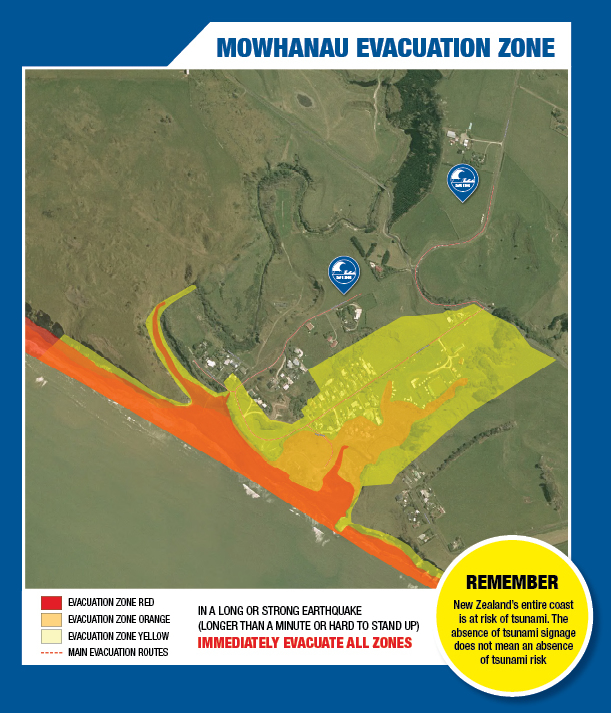
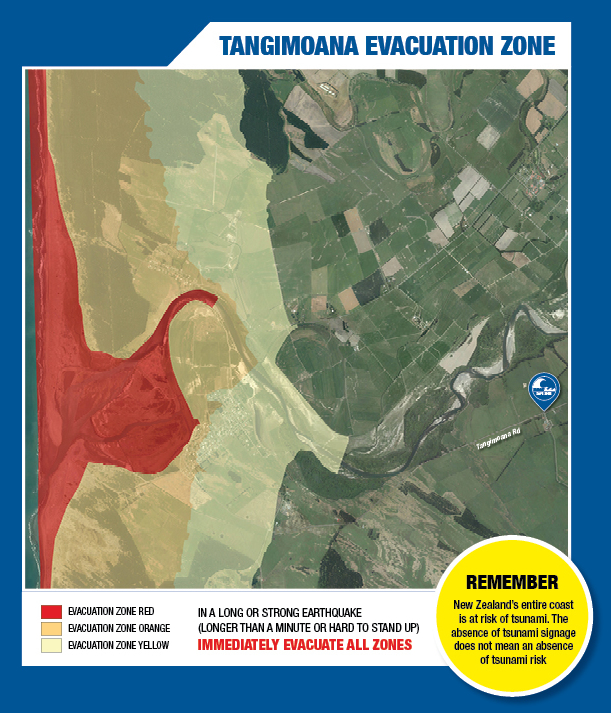
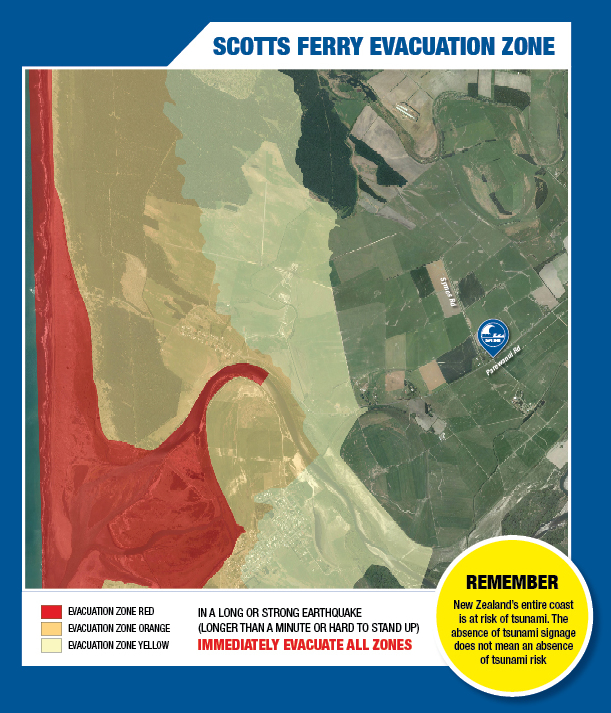
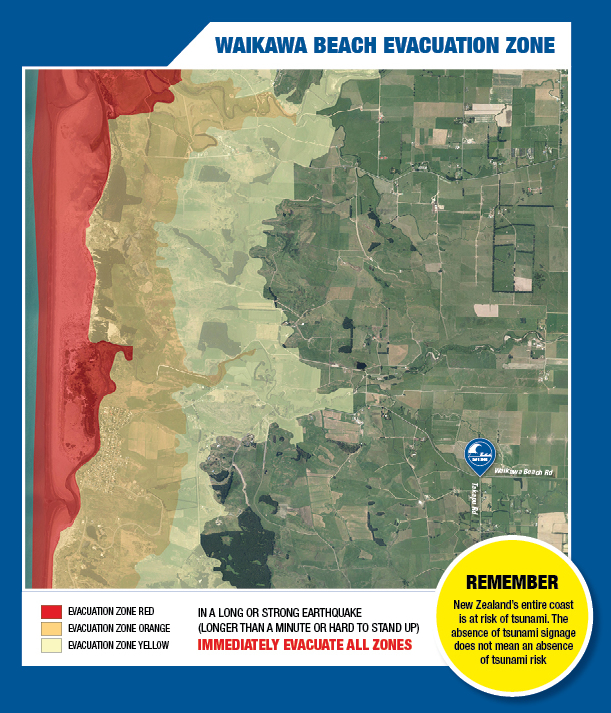
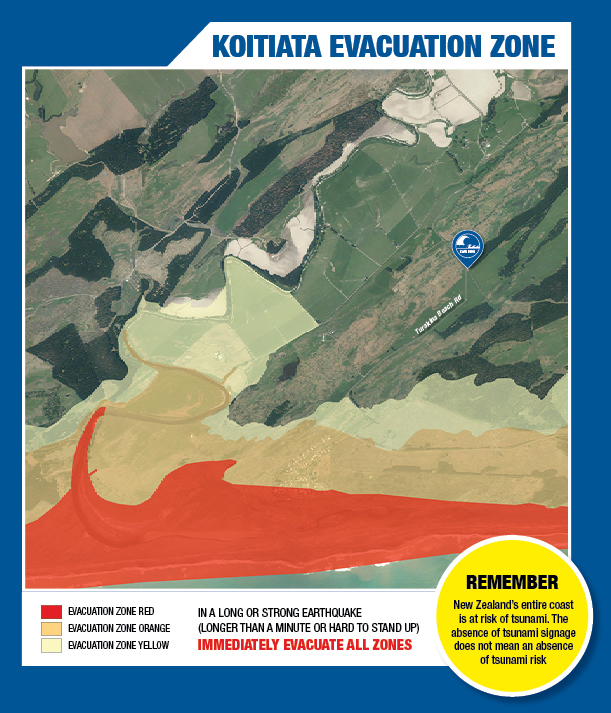
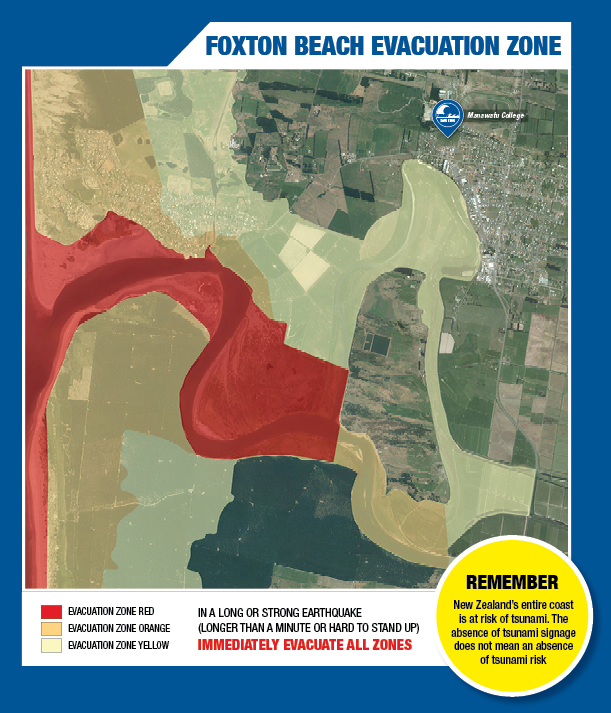
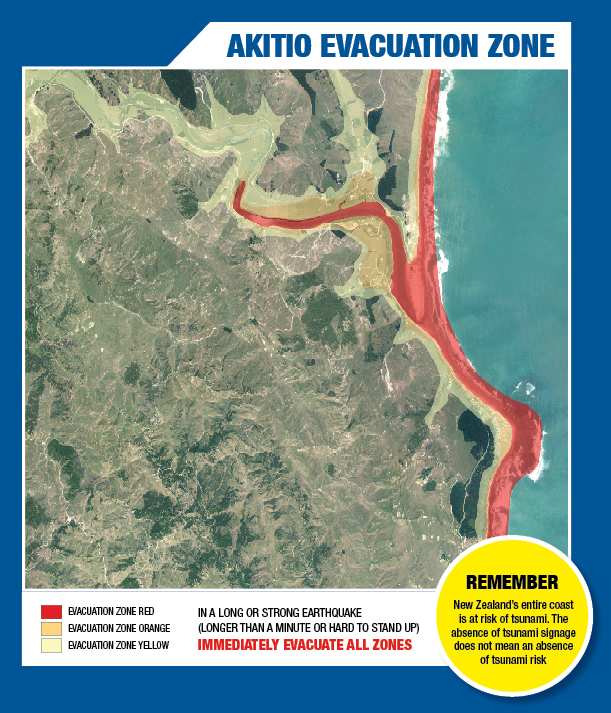
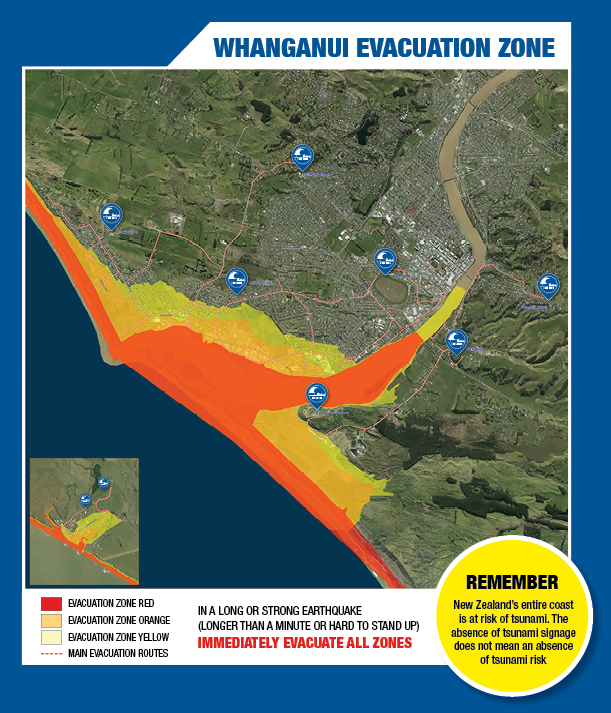
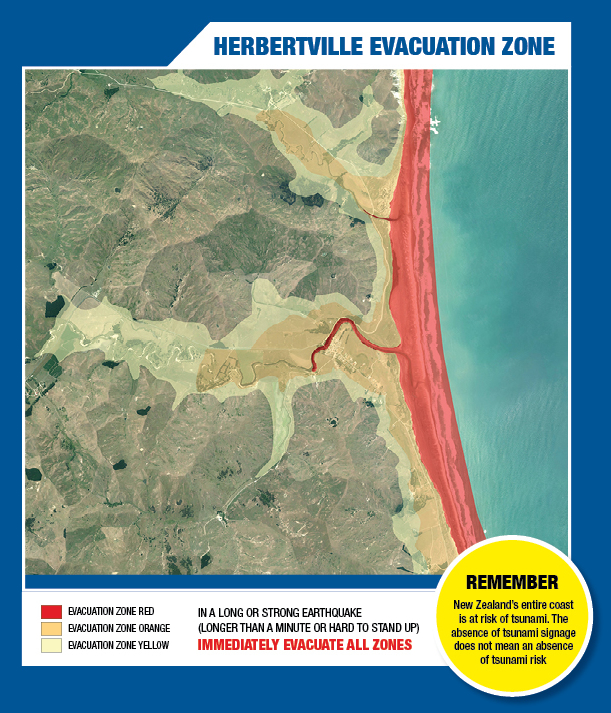
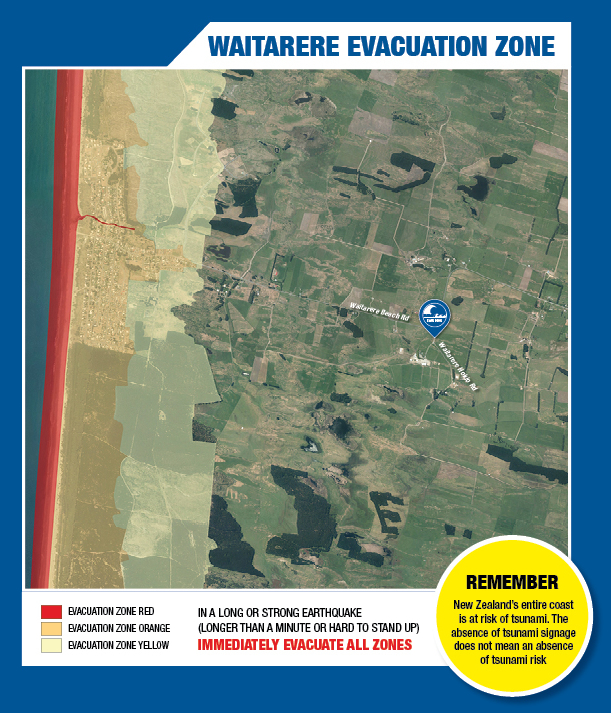
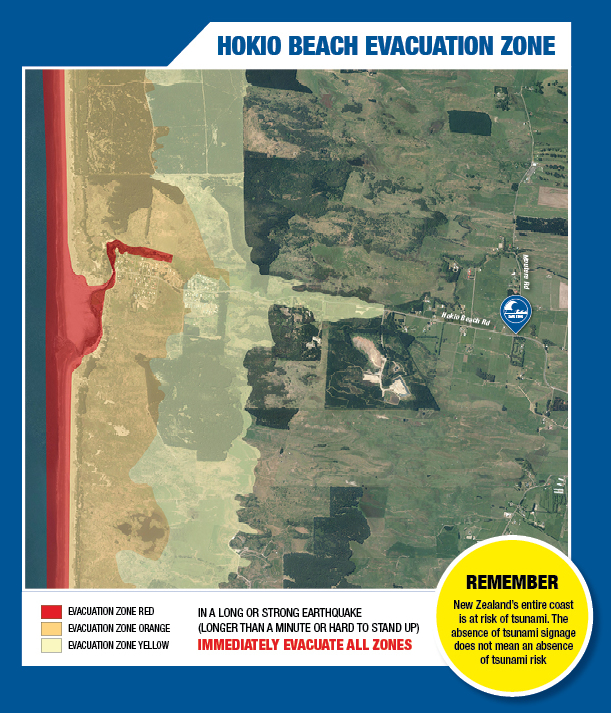
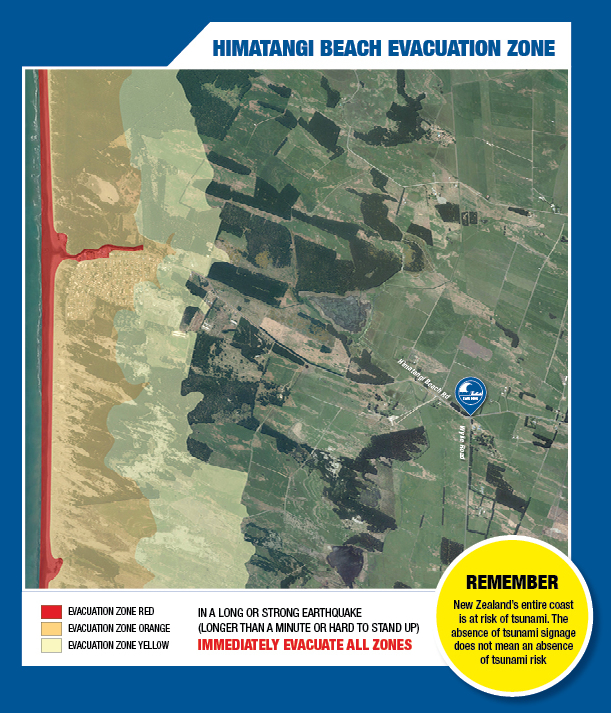
Regional tsunami evacuation zones
Tsunami evacuation zones in the Manawatū-Whanganui Region
 |
 |
 |
 |
 |
 |
 |
 |
 |
 |
 |
 |

